Non Finito [2014]
Série de 10 photographies réalisée en France et dans le nord de l'Espagne.
Tirages pigmentaires, Epson Hot Press Bright White paper 300g - 133 x 120 cm - Dibond 2mm / Caisse américaine.
Series of 10 photographs realized in France and northern Spain.
Pigment prints, Epson Hot Press Bright White paper 300 g – 133 × 120 cm – Dibond 2 mm / float frame.




TEXTE FRANÇAIS
À l’origine des deux séries, Non Finito et Empire of Dust, se trouve l’impact de la crise financière de 2008 et la quête d’images et de lieux capables d’exprimer l’effondrement d’un système, le capitalisme, dont on a pu constater les effets à la Nouvelle-Orléans, à Détroit, à Athènes ou encore en Espagne.
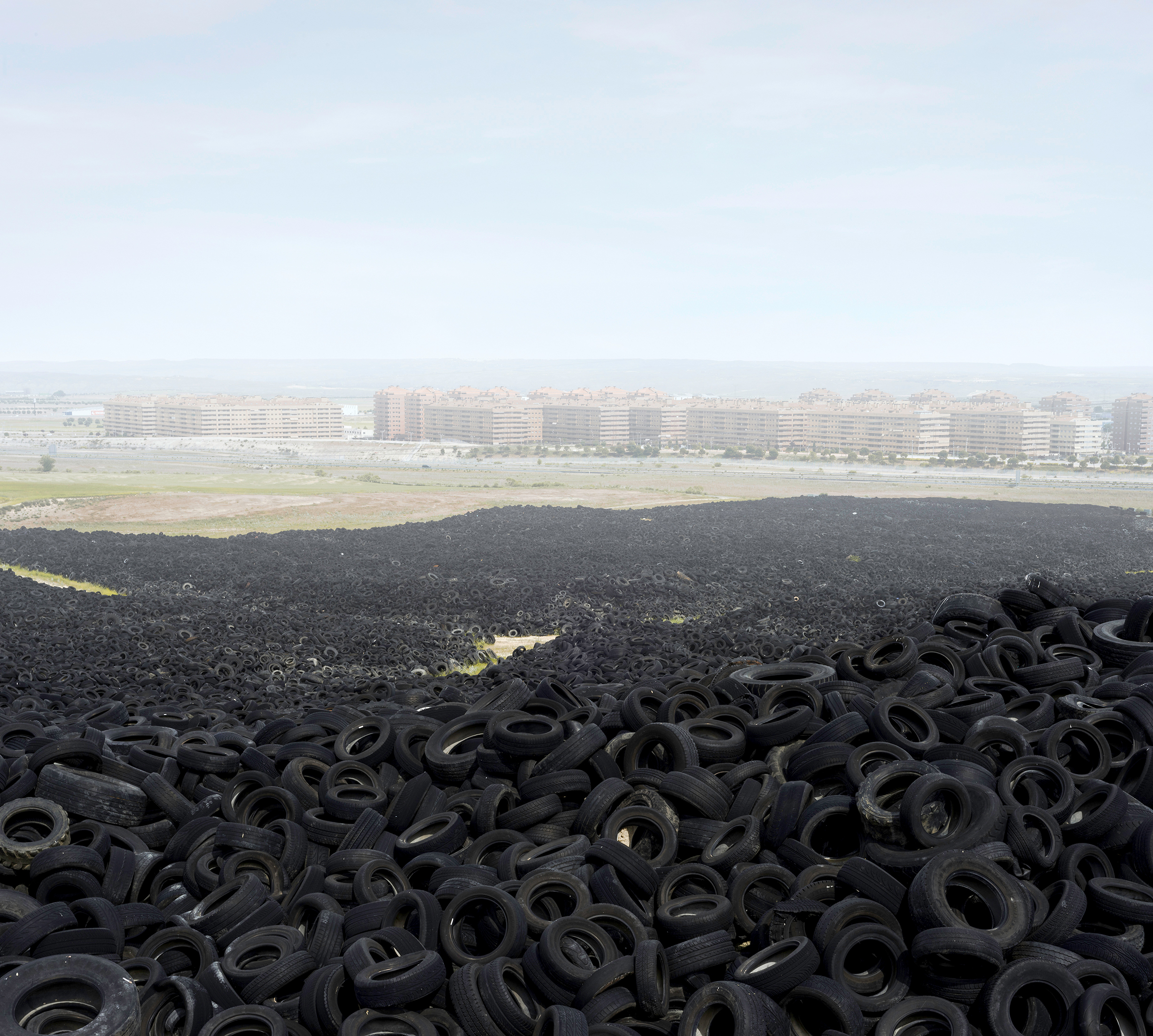
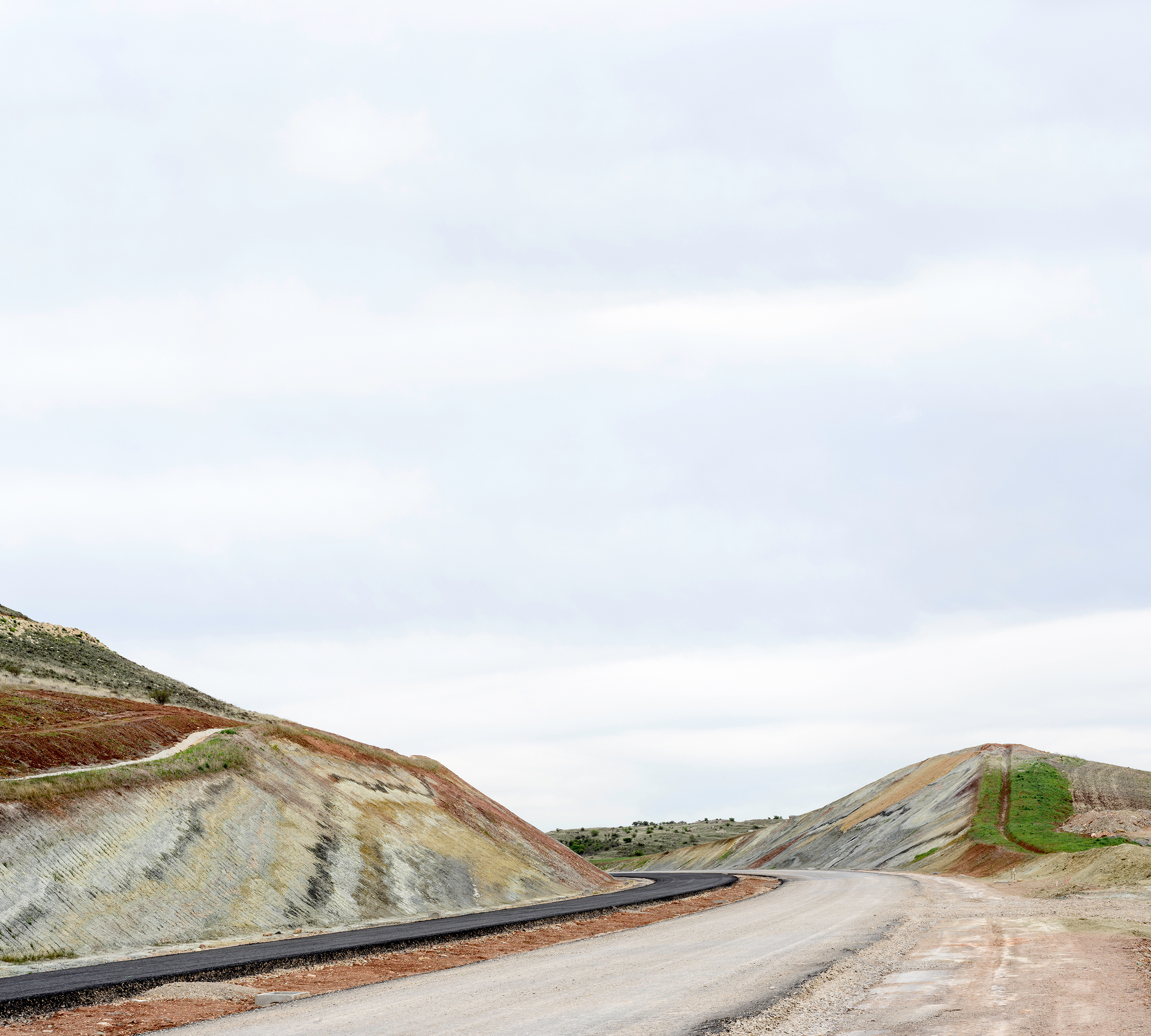
Pour la première série sur les constructions inachevées, Non Finito, Amélie Labourdette a choisi l’Espagne, pays touché par l’effondrement de la bulle immobilière. Cette série photographique imagine une “archéologie du présent“ affectée par des bouleversements idéologiques, politiques et économiques. Elle y explore la notion d’inachèvement, de “non finito“ initiée par Michel-Ange, comme potentiel d’un “devenir-autre“. Entre documentaire et fiction, ce projet révèle des paysages marqués par des constructions inachevées, des squelettes de béton flottant dans un état d’entre-deux, indéfini.
En s’interrogeant sur le glissement possible de l’identité des formes et de leurs perceptions à travers la photographie, Amélie Labourdette s’est intéressée à la notion de non finito. Cette réflexion a donné naissance à la série éponyme réalisée en Espagne, puis à Empire of Dust dans le sud de l’Italie. Le concept de non finito, littéralement “non terminé“ et interprété artistiquement comme “esthétique de l’inachevé“, désigne des sculptures inachevées par l’artiste, volontairement ou non. L’inachèvement présente l’œuvre sous une forme interrompue, comme une étape du processus de création et condition d’une “œuvre ouverte“, des “œuvres à venir“. Cette esthétique est intrinsèquement liée aux définitions de la modernité, qui valorisent la perception du spectateur dans la construction de l’œuvre : “c’est le regard du spectateur qui fait l’œuvre“.
À travers cette série photographique, en initiant une conversion du regard du spectateur, Amélie Labourdette interroge le glissement possible de l’identité de ces formes singulières, leur conférant une dimension surréelle et les faisant accéder à une dimension plastique, un devenir sculpture. Ce travail photographique réside dans le passage d’un registre à l’autre au sein d’une même image, dans l’équilibre entre image “document“ et image “fiction“, où différentes réalités possibles coexistent.
ENGLISH TEXT
At the origin of the two series, Non Finito and Empire of Dust, lies the impact of the 2008 financial crisis and the search for images and sites capable of expressing the collapse of a system—capitalism—whose effects could be observed in New Orleans, Detroit, Athens, and Spain.
For the first series on unfinished constructions, Non Finito, Amélie Labourdette chose Spain, a country affected by the collapse of the real estate bubble. This photographic series envisions an “archaeology of the present” marked by ideological, political, and economic upheavals. Within it, she explores the notion of incompletion, of “non finito,” initiated by Michelangelo, as the potential for a “becoming-other.” Situated between documentary and fiction, this project reveals landscapes marked by unfinished constructions, concrete skeletons suspended in an in-between, indeterminate state.
By questioning the possible shift in the identity of forms and their perception through photography, Amélie Labourdette turned to the notion of non finito. This reflection gave rise to the eponymous series realized in Spain, and subsequently to Empire of Dust in southern Italy. The concept of non finito, literally “unfinished” and interpreted artistically as an “aesthetics of incompletion,” refers to sculptures left incomplete by the artist, whether intentionally or not. Incompletion presents the work in an interrupted form, as a stage within the creative process and as the condition of an “open work,” of “works to come.” This aesthetic is intrinsically linked to definitions of modernity that valorize the spectator’s perception in the construction of the work: “it is the gaze of the spectator that makes the work.”
Through this photographic series, by initiating a conversion of the spectator’s gaze, Amélie Labourdette interrogates the possible shift in the identity of these singular forms, conferring upon them a surreal dimension and enabling them to access a plastic dimension, a becoming-sculpture. This photographic work resides in the passage from one register to another within a single image, in the balance between the image as “document” and the image as “fiction,” where different possible realities coexist.